
Founding Story

About the Founder
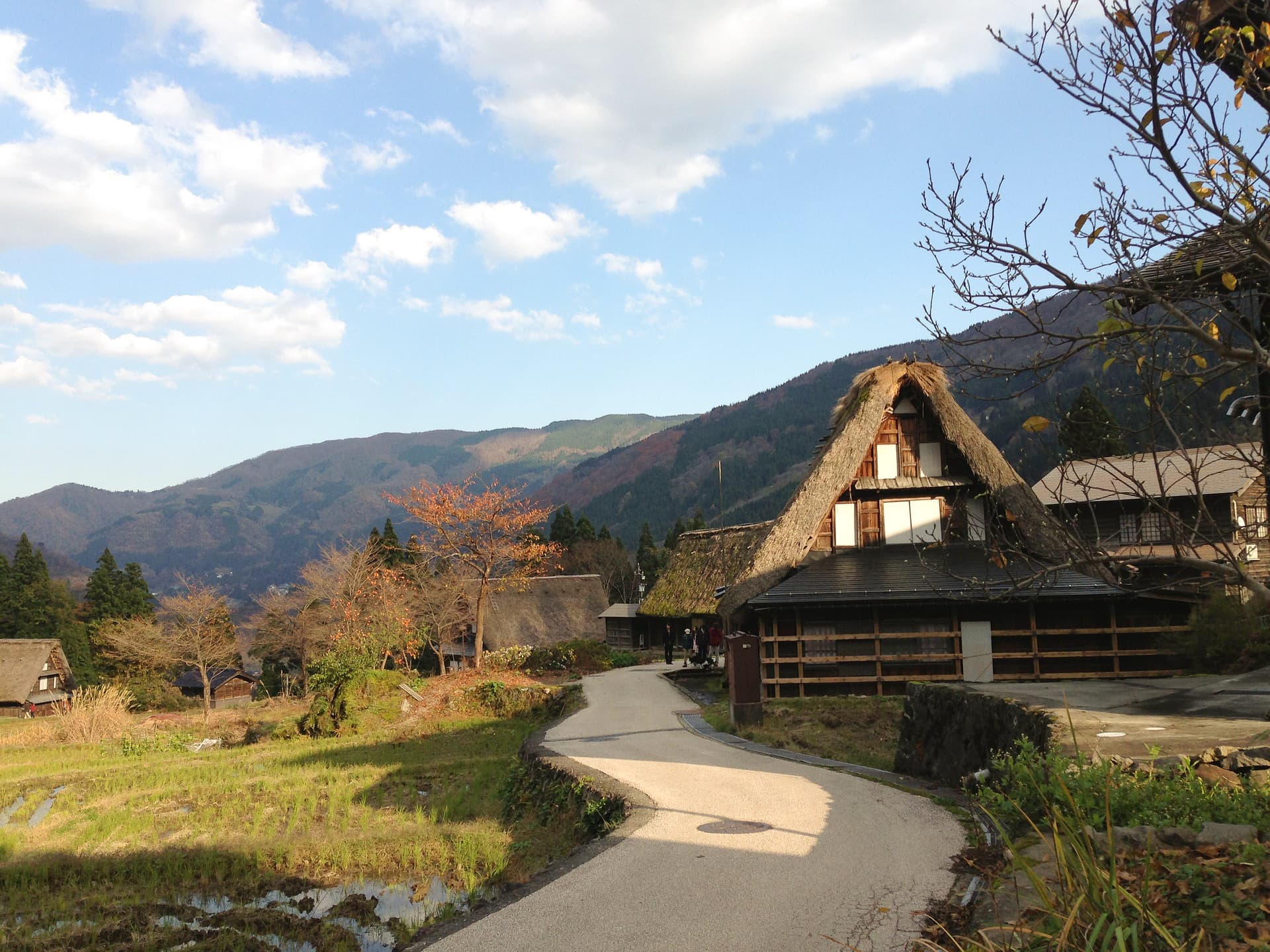
Hyozou Hashimoto, the founder of Gekkoso Art Supplies, was born in Toyama in 1894 (Meiji 27) and grew up in a nature-rich town where the snowmelt from the Northern Alps flowed into the Sea of Japan.
Hyozou's father was a man who would gently advise, "The fruit within reach of the persimmon tree is for the pilgrims, the fruit at the very top is for the birds, and you children should only take and eat the fruit in the middle," and it is said that he repeatedly taught Hyozou the importance of people and animals living together and helping each other in the lap of nature.
He also believed that an environment for learning was important for children, so he bought books one after another and stacked them in the storehouse. This was a form of silent education, and Hyozou was able to grow up reading many books. There was a saying his father repeated so often that it became ingrained in Hyozou's mind from the time he was old enough to remember.
"1. Do not lie. 2. Do not steal. 3. Work with all your might. If you can do these, you are halfway there. And if you can also repay the kindness of others, you are a complete man."
And Hyozou's mother was also a compassionate woman who never looked down on her family's poverty, but instead took rice cakes from her own home to give to even poorer neighbors.
Although his formal education ended with elementary school, Hyozou, raised by such strict yet warm parents, developed a free spirit and would run through the mountains and fields, his heart fluttering at the beauty of the flowers and plants. He also loved watching rainbows in the sky, and at one point, he was so drawn to the beauty of nature that he ran off despite his teacher's restraint, shouting, "I want to cross that rainbow bridge!"
The Birth of Gekkoso
Having spent his formative years in a nature-rich environment, Hyozou eventually came to long for Tokyo, and at the age of 18 in 1912 (Taisho 1), he left Toyama for the capital. After working a succession of jobs, including as a mail carrier, he began working as a live-in apprentice at the Kudan home of Mr. Fischer, a YMCA secretary. The house across the street was the home of the poet couple Tetsukan and Akiko Yosano.
Hyozou, who had long admired the couple's poetry collections, felt his heart flutter every day with the hope of meeting them just once, and one day he finally made up his mind to visit them alone. The couple welcomed the young man, who looked like a complete country bumpkin and had suddenly shown up at their door, without a hint of displeasure. Not only did they take a liking to Hyozou and tell him to visit anytime, but they also began introducing him to the guests who gathered at the Yosano home from time to time.
At the time, the couple ran the magazine "Meisei," and their home was a gathering place for people from all walks of life, including poets such as Shiro Kitahara, Takuboku Ishikawa, and Kotaro Takamura, painters such as Takeji Fujishima, Ryuzaburo Umehara, Namaro Arishima, and Saburo Okada, as well as architects and Kabuki actors.
Hyozou could not offer any clever conversation at the couple's home and simply listened silently to everyone else talk, but he gradually became popular with the people who gathered there, and before he knew it, a world of art he had never known before began to unfold in his heart. He became captivated by what the painters spoke of as "the eye to see things" and "the heart to express them."
It is said that the always-reserved young man once gathered the courage to stand before the master painters and speak of how much he had longed for the rainbows he had seen in the town where he was born and raised. Before he knew it, he had begun to think about how he might join this group of fascinating artists and be of use to them.
Everyone began to offer him advice.
"You have a longing for color, and you have a good sense and sensitivity, so why not try a job related to color?"
Hyozou knew that the painters were deeply dissatisfied with the paints and art supplies sold in Japan. It was the moment he clearly saw the path he was meant to follow with his life: an art supply merchant. In his later years, Hyozou spoke of his feelings at that time as follows.
"I made a firm resolution to be of use to the masters who were devoting their lives to the great cause of art."
Hyozou first began importing paints from abroad. When an order for art supplies came in, he would deliver them by bicycle on days of heavy rain and wind, just as he had done in his days as a mail carrier. Eventually, he saved enough money, and finally, in 1917 (Taisho 6), the first Gekkoso Art Supplies store opened in the Kadobazu corner of Tokyo Shin
Kyujuku. Hyozou was 23 years old.
And just as he was about to open the store, he received a poem from Akiko Yosano.
"From the moon
in the vast sky,
you came,
and the day shone,
and the night shone."
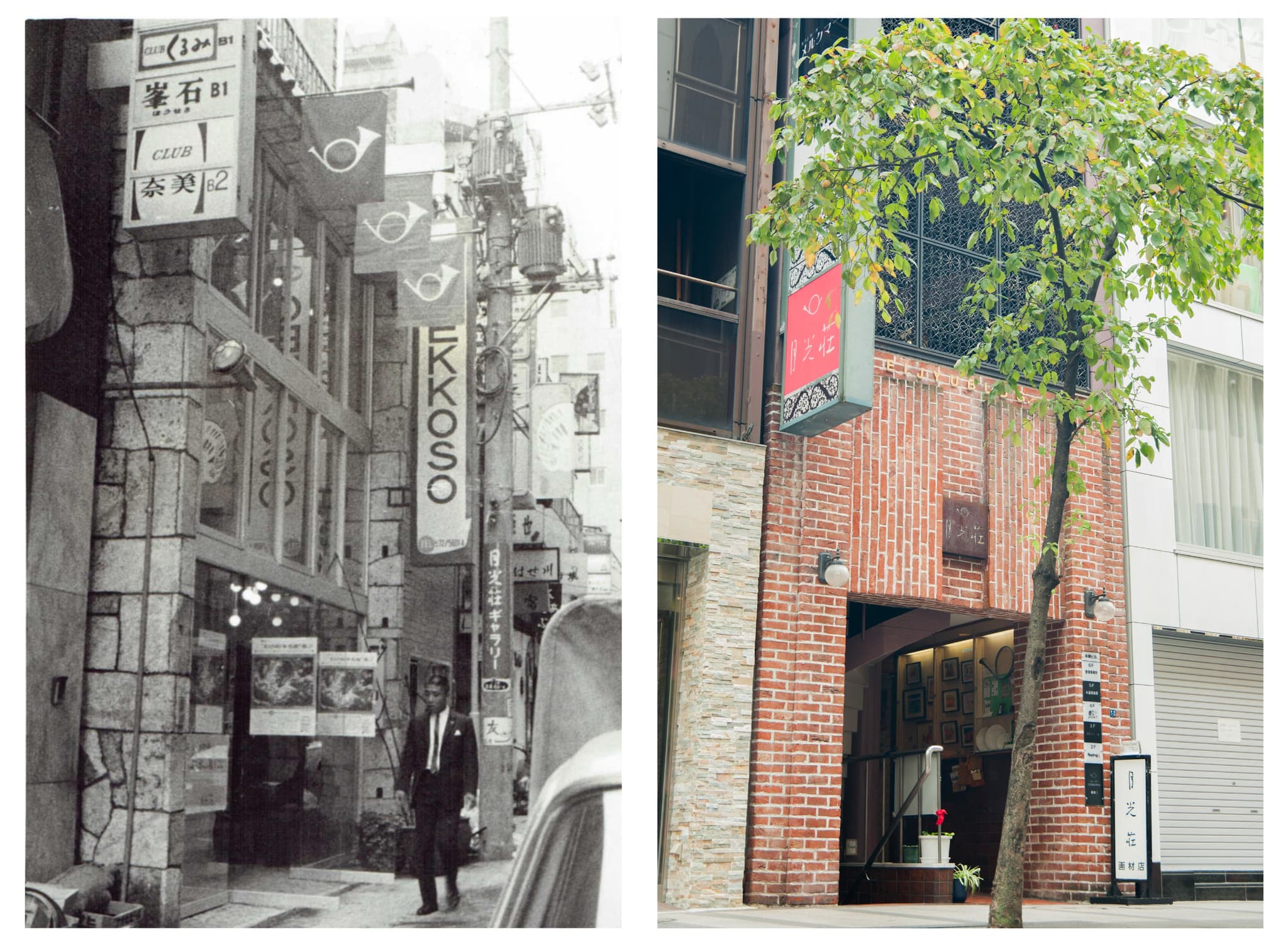
And Tetsukan, quoting from Verlaine's French poem "Moonlight and Man," named it "Gekkoso." The "Gekkoso" sign at the entrance of the current store is also written in a calligraphy style created by Akiko Yosano herself.
And so that he would never forget the kindness of the Yosano couple throughout his life, Hyozou began to call himself "Gekkoso Oyaji." From then on, all his mail began to arrive addressed to "Gekkoso Oyaji" or "Gekkoso Ojisan."
Also, the trademark "Horn that Calls Friends" was conceived by the cultural group of the time centered around the Yosano couple (including about 30 people such as Kaoru Koyamauchi, Ryunosuke Akutagawa, Fumoru Shimazaki, Takeo Arishima, the first generation of Ennosuke, Ritsuko Mori, Takeji Fujishima, and Saburo Okada), and it was imbued with the wish to play a sound that would gather many people. How moved Hyozou must have been.
The store's architectural design was supervised by the painter Tsuguharu Fujita, and its design was so novel for the time that it looked as if a street corner in Paris had been transplanted directly there, so it was used as a location for various films because it was such an unusual building. There was also a tall French woman among the staff, and it seems the store had a quite fashionable atmosphere for the time.

In the Early Days
Worried about the financial aspects after starting the business, Akiko Yosano gave Hyozou a business card with "My Friend" written on it and introduced him to Aizo Soma, the owner of Shinjuku Nakayamaya, Genjiro Yasuda, a native of Toyama and founder of the Fuji Bank, and Toyohiko Kagawa, founder of the Seikatsu Shingikai, so that he could learn the basics of management.
"Do not think about what will sell, but sell what will make people happy."
"Make what you sell yourself, and sell only what you are confident in. And do not sell cheaply by lowering prices just for the sake of selling. A painter who is obsessed with paint will surely not succeed. Never become a slave to money, no matter what happens."
With the advice of these great management predecessors, Gekkoso got started.
Even while running the store, Gekkoso Oyaji continued to deliver art supplies. This was so he could see how painters actually used the supplies, conduct research, and continuously make improvements. It is said that in his youth, he went almost every day to the ateliers of Ichise Nakagawa, Ryohei Koiso, Genichiro Inokuma, Toshio Nakanishi, and Kazuo Wakita.
Eventually, about five or six years after opening, the store gradually began to get on track, and it became a place like a salon where people from the cultural world of the time gathered, centered around the Yosano couple.
Development of Pure Japanese Paints
At the beginning of the 20th century when Gekkoso was founded, the Japanese Western painting world was in an era of trying to catch up with and surpass France, and when it came to paint, there was no choice but to rely on French paints. Gekkoso also did not yet have completed paints of its own, and in addition to L.C.H. (Les Cèches) PARIS paints, which were the only French paints handled in Japan at the time exclusively by Gekkoso, it also imported and sold Florence oil paints and others.
Speaking of imports, at that time they were shipped by sea, so it took at least two months to arrive, and not only were they expensive, but paints were by no means easily obtained, as there were no colors available when painters wanted them. Also, at that time, although there were Japanese paints, they were merely made by mixing imported European dyes, and they contained many impurities, so their quality was incomparable to imported paints made with pigments.
Under such circumstances, Hyozou felt a sense of mission that he had to create vivid, genuine paints made entirely in Japan that painters devoting their lives to creating works could be proud of, and he began developing paints himself.
When the war began, imports from abroad were cut off, so the Ministry of Education ordered companies to manufacture substitute paints. Everyone in the industry agreed, and the era of substitute paints began. However, Hyozou was the only one who stubbornly opposed substitute paints, insisting that a painter cannot change the paint once a painting is done, and remained committed to making genuine paints.
When painters gathered, they could be heard speaking one after another, hoping for the completion of Japanese paints as soon as possible. Even if he were surrounded by enemies, it was absolutely necessary to make his own pigments to stand on par with British and French products. During the war, cobalt was an essential metal for refining special steel and was extremely important from a military standpoint. At the same time the war began, the Japanese government of the day allocated a large budget and ordered research laboratories at various universities to develop cobalt. However, no matter how many years passed, they could not complete it.
In such a situation, the first thing Hyozou tackled was "cobalt blue." Pigments for paint are made by burning the raw minerals at high temperatures and extracting the components from them. Since Hyozou had no specialized knowledge, he read every available technical book one after another, and in a state of trial and error, he repeatedly experimented to find out how he could extract blue cobalt components from the raw minerals.
Sifting through stones at the bottom of a river,
crushing and burning them,
then crushing them again, over and over.
When burning, he continuously experimented with what temperature of thousands of degrees would work and how long would be best. And as a result of continuing his research without giving up, driven by a strong desire to be of use to the painters no matter what, the ore that had been carefully burned using his original technology finally glowed blue in the furnace. It was in 1940 (Showa 15) that the extraction of cobalt blue pigment succeeded. It is said that he came up with a method to extract cobalt components from the eruption of a geyser he happened to see.
Thus, for the first time in Japan, pure Japanese oil paints made from pigments were completed. This was 23 years after he founded Gekkoso Art Supplies.
The Western painter Genichiro Inokuma, who rejoiced at the completion of these pure Japanese paints, immediately went around informing various newspapers of the birth of cobalt blue, but it did not even make a single line in the articles. This was because it would have completely ruined the country's pride to say that what the research laboratories of top universities, which the government had poured enormous research funds into, could not complete had been completed in a tiny local factory. On the contrary, rumors were even spread that "there is no way a mere local factory could do it, so they must be gradually releasing what they had imported and stockpiled before the war." At such words, Hyozou was indignant and declared firmly.
"Then, even through the Art League,
try ordering a large amount at once.
I will fulfill even hundreds of dozens of orders."
Eventually, the Army issued an order saying, "If you really have cobalt, submit it." Hyozou refused this military request. And the next day, a request came from the Ministry of the Navy as well. Although cobalt was important from a military standpoint, he decided to provide it exclusively as paint for paintings. It was because of such circumstances that all works known as "war paintings" used only Gekkoso paints. War is a tragedy that must never happen again, but the colors of war paintings still shine brilliantly today.
And even after the war, the research and development of paints continued, and in 1948, S.O.S. (a paste-like quick-drying agent) was invented, and in 1952, the production of titanium white succeeded. In 1960, he invented Cobalt Violet Gekkoso Pink (Cobalt Violet Pink), which is called "Gekkoso Pink." This Gekkoso Pink won first place in the World Paint Competition in 1971, and was praised by Le Monde as "a miracle born in a country other than France."
Other Activities
In the early Showa era, Hyozou took the lead in publishing "Gekkoso News," a magazine that featured color photographs on the cover, which were still rare at the time. It played a major role in deepening the exchange among painters, and even after the Showa era began, he founded "Western Painting News," which combined his favorite "Western movies" and "Western paintings," followed by the magazine "Modern Landscapes." After the war, he made something printed on large sheets of paper with products and news, calling it "Reading Wrapping Paper." For "Gekkoso Oyaji," who did not smoke tobacco and lived with the self-restraint of having only a single cup of sake as his evening drink, making magazines was an irreplaceable pleasure.
Also, around Showa 16, he opened a gallery as a place for emerging artists to showcase their work, and held the "Newcomer Competition Florence Award" with Saburo Okada as a judge. This philosophy of nurturing new artists continues to flow at the root of the current operation of the Gekkoso Art Studio.
After the War, to Ginza
The Shinjuku store was reduced to ashes in the Great Air Raid of Showa 20, and the ideal town for painters he had built in the mountains of Natsukawa Onsen in his hometown of Toyama was also destroyed in the post-war fire, leaving Hyozou truly penniless. And in Showa 23, after the war ended, he reopened the store in front of Taimei Elementary School in Ginza, Tokyo. "If we are going to do it, Ginza is best." It is said that Mr. Genichiro Inokuma, who recommended Ginza, encouraged Hyozou with a joke, saying, "Oyaji, it's a good thing you burned down." After that, he moved several times within Ginza, and since Heisei 18, along the Hanatsubaki Street in Ginza 8-chome, he continues to welcome customers today.
About the Future of Gekkoso
Gekkoso, which started from Akiko Yosano's salon in Taisho 6, has been operated with the philosophy that "a sense of color and a sense of sound are the treasures of life."
And as Gekkoso celebrates its 100th anniversary, new companions have joined. Along with live music every night, "Gekkoso Salon Tsuki no Hanare" is a place where people with modern sensibilities gather and talk, and "Haruzou Paint" is one that inherits the technology and spirit of Haruzou Nagasaki, a pioneer of Japanese paint development.
In the next 100 years, I hope the Gekkoso Group can weave the threads of sensitivity freely as a "place" where people gather, exchange thoughts, and grow together, and propose the richness of a new era.